


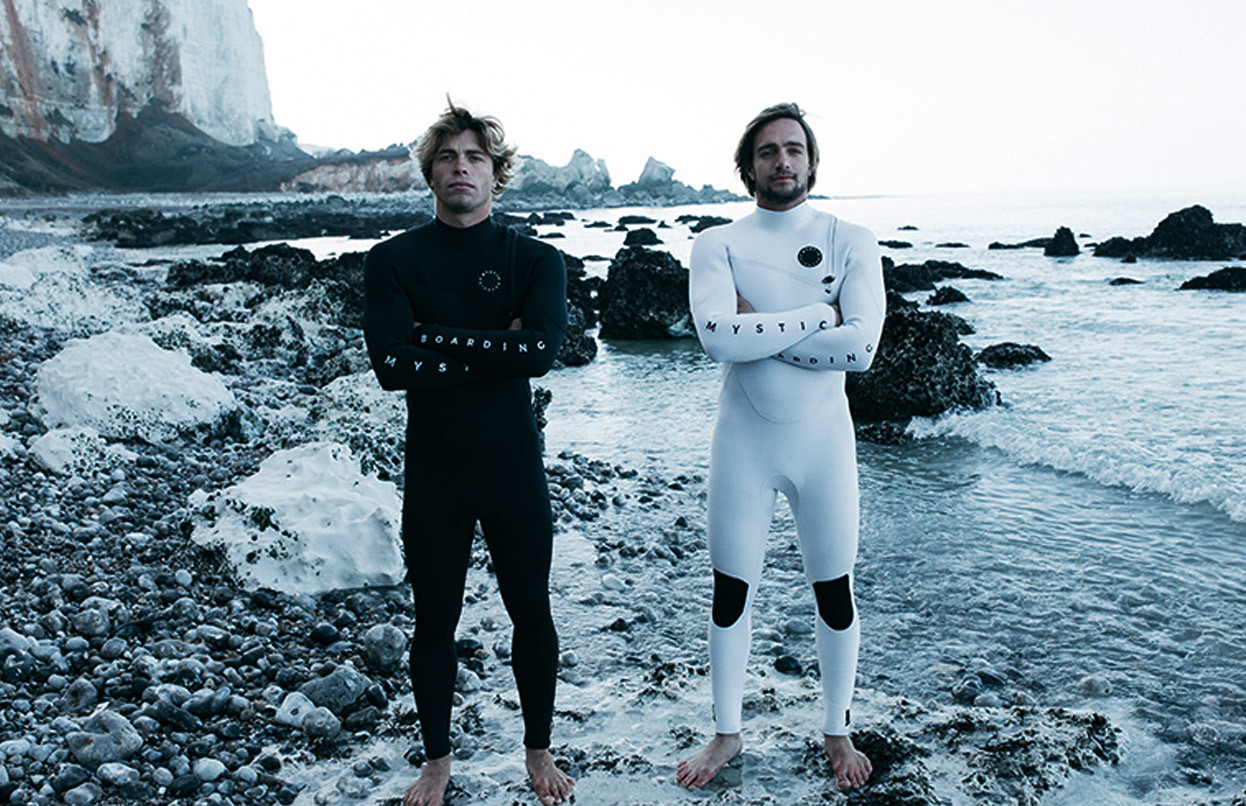
The cold is here! Winter is coming, and buying a new wetsuit isn't always the best solution. There are relatively affordable accessories that can complement what you already have and make your winter sessions much more comfortable.
First, let's talk about wetsuits: typical thicknesses, elasticity, sizing, and other characteristics you may have heard of but might not consider when choosing your wetsuit.
Thickness and Water Temperature
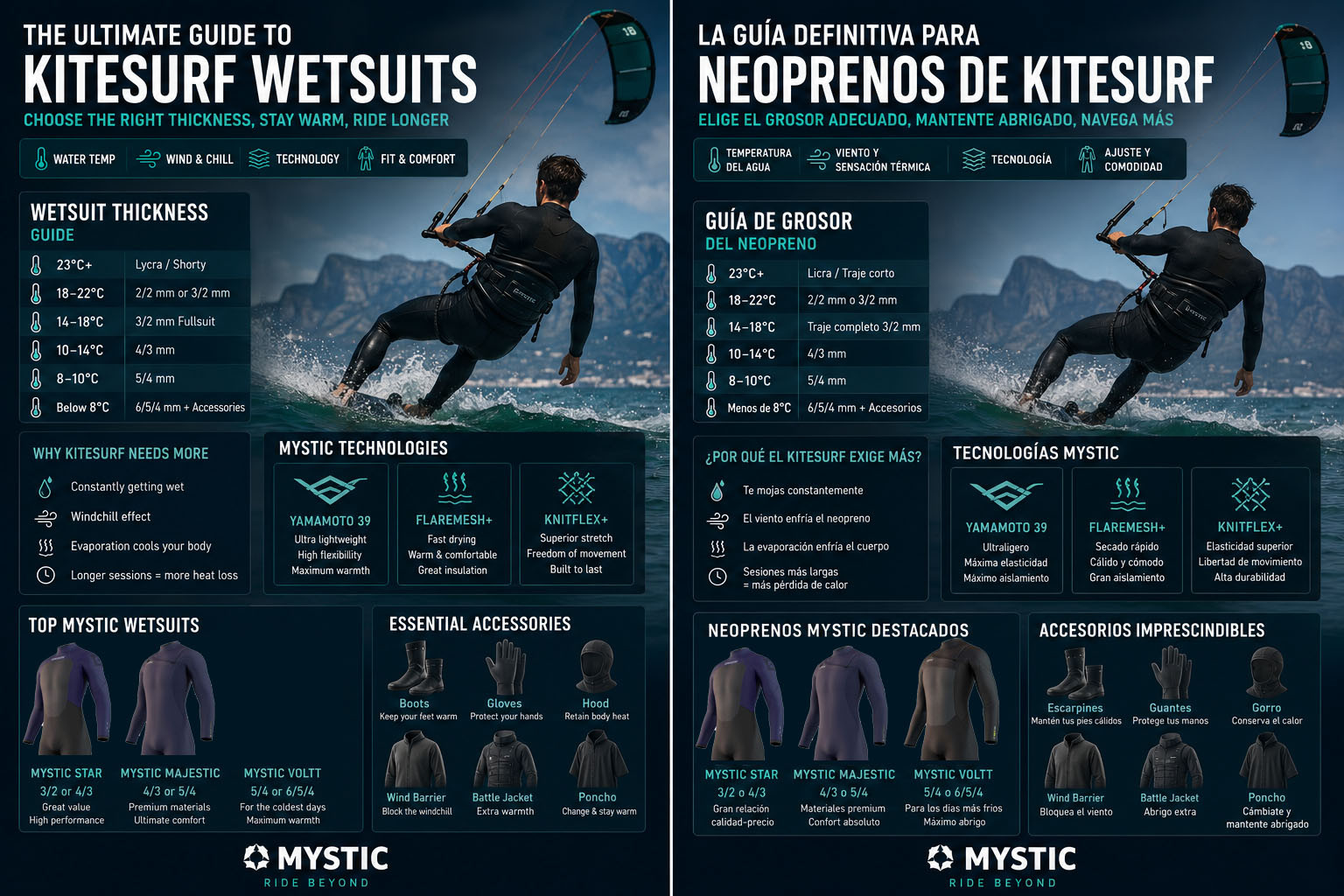
The first thing we usually look at in a wetsuit is the thickness, and we often choose it based on the water temperature. Various brands offer tables indicating the recommended wetsuit thickness for different water temperatures. However, we see this as a guideline, not an absolute truth. Using a wetsuit for surfing is not the same as using it for wakeboarding or kitesurfing. We’ll explain why later. Here’s the notation brands use for thickness:
- 2 mm: The entire wetsuit has a thickness of 2 mm (the value is just an example, it could be any thickness).
- 4/3 mm: The first value refers to the thickness of the chest and back, while the second refers to the thickness of the extremities. In this example, you'd have a 4 mm wetsuit in the chest and back and 3 mm in the arms and legs.
- 5/4/3 mm: The first value refers to the chest and back, the second to the upper extremities (arms), and the third to the lower extremities (legs). In this case, you’d have a 5 mm wetsuit in the chest and back, 4 mm in the arms, and 3 mm in the legs.
As mentioned before, depending on the water temperature range, you’ll choose one thickness or another. Here are the recommended thicknesses:
- 23ºC or more: No wetsuit needed, but a thin rash guard or shorty is recommended to avoid hypothermia during long sessions.
- 21ºC to 23ºC: No wetsuit is needed, but a 1 mm thermal top is recommended.
- 18ºC to 21ºC: Short or mixed wetsuit (long sleeves, short legs) of 2 mm or 3/2 mm.
- 17ºC to 18ºC: Short or mixed wetsuit (long sleeves, short legs) of 2 mm or 3/2 mm.
- 14ºC to 17ºC: Long wetsuit of 3/2 mm or short-sleeved 3/2 mm.
- 12ºC to 14ºC: Long wetsuit of 3/2 mm or 4/3 mm.
- 10ºC to 12ºC: Long wetsuit of 4/3 mm.
- 8ºC to 10ºC: Long wetsuit of 5/4 mm or 5/3 mm.
- 8ºC or less: Long wetsuit of 6/5/4 mm.
In all cases, sunscreen is always recommended, regardless of the season; it’s an essential item.
As we said, the table is just a reference, and now we’ll explain why wetsuit thickness might change depending on the activity. For surfing, most of the time is spent in the water, so wind doesn’t affect performance much. However, with kitesurfing, you’re in and out of the water, exposed to the wind, and need better temperature regulation, especially on cold, windy days. Therefore, these external factors should be considered when choosing thickness.
Elasticity
Elasticity is an increasingly important feature for wetsuits. A more elastic wetsuit fits the body better, which helps maintain body heat. A less elastic one won’t fit as snugly and may not perform as well. In the past, more elastic wetsuits tended to wear out faster, but with advancements in materials, that’s no longer the case. Now, you can have a highly elastic wetsuit that’s also durable.
Zipper Type
There are three main types of zippers: front zip, back zip, and zipperless. Choosing one over another is mostly personal preference, as they don’t differ much in fit or comfort.
- Back Zip Wetsuit: Zipper at the back.
- Front Zip Wetsuit: Zipper at the front.
Seams and Finish
The type of seams affects how much water enters the wetsuit, which in turn influences temperature retention. For warmer waters, a wetsuit that allows more water inside can be more comfortable, while in winter, you’ll want a wetsuit that’s as watertight as possible. There are three types of seams:
- Basic Seams: The wetsuit is glued and sewn, allowing more water in. These are more affordable.
- Seams and Tape: The wetsuit is glued, sewn, and the seams are taped to reduce water entry. These are a bit more expensive.
- Seams, Tape, and Waterproof Sealant: The wetsuit is glued, sewn, taped, and a special waterproof sealant is applied to make it highly watertight (70% to 100% waterproof). These are the most expensive.
A wetsuit’s performance isn’t just about how it looks on the outside. Internal features, like knee pads, elbow pads, or shin guards, are crucial depending on the sport. For example, knee pads with more friction are helpful for surfing, and shin guards can protect you from painful impacts with the board during kitesurfing, especially while learning.
Interior features also matter. Some wetsuits with the same or even greater thickness may not retain heat as well due to inferior interior fabrics or lower water resistance. Thermal linings and more water-resistant fabrics can significantly increase the price but are often worth the investment.
Sizes
Each manufacturer has its own wetsuit sizing guide and offers more or fewer sizes depending on the model. Here are the common sizes:
- XS: Extra small.
- S: Small.
- MS: Medium short (medium width, short height).
- M: Medium.
- MT: Medium tall (medium width, tall height).
- LS: Large short (large width, medium height).
- L: Large.
- LT: Large tall (large width, extra tall height).
- XLS: Extra large short (extra large width, medium height).
- XL: Extra large.
- XXL: Double extra large.
We recommend checking the manufacturer's size guide or asking for expert advice, especially when buying without trying on the suit.
Accessories
Now we get to an important point. You've learned in summer, bought a 4/3 mm wetsuit, and now you're hooked on kite, surf, or wakeboarding. But the water is too cold, and you can't last a full session. Do you need to buy a thicker wetsuit? Our answer is NO, it’s not strictly necessary because there are accessories that can help you save some money.
-
Thermal Tops or Rash Guards: The trunk (chest and back) loses heat the fastest, making the cold less bearable. A good thermal rash guard or vest under your wetsuit can help retain body heat and avoid needing a thicker wetsuit.
-
Hoods, Boots, and Gloves: Many neoprene accessories are comfortable and help protect you from the cold. Did you know that most of your body heat is lost through your head? A good neoprene hood will help you retain it. Gloves and boots are essential for keeping your hands and feet warm since they’re constantly exposed to the wind and water.
-
Technical Tops: Water-resistant and neoprene tops are available that can be worn over your wetsuit and combined with rash guards. These protect you especially well in windy conditions and are stylish, practical, and affordable.
Finally, once you're out of the water, it’s important to bundle up and avoid catching a cold. Whether you’re resting on the beach or wrapping up your session, items like a poncho or thermal jacket can keep you warm and prevent those dreaded colds.
At RideZone, we have a team of professionals ready to assist you with no obligation. We hope these tips help, and feel free to comment on this post or ask for advice. We’d be happy to assist you!
Good winds to all!