


When winter arrives, many riders immediately think they need a thicker wetsuit. However, choosing the right wetsuit for kitesurfing depends on far more than just water temperature.
Factors such as:
- wind strength
- session duration
- wetsuit flexibility
- riding discipline
- and technical accessories
can completely change your comfort level on the water.
In this complete guide we’ll explain:
- which wetsuit thickness to choose
- how windchill affects your body
- the differences between surfing and kitesurfing wetsuits
- which modern technologies are worth it
- how to choose the right size
- and which Mystic wetsuits and accessories we recommend for different conditions
If you want to stay warm and comfortable all winter long, this guide is for you.
Why Kitesurfing Requires More From a Wetsuit Than Surfing
One of the most common mistakes is assuming:
“If surfers use a 4/3, I can too.”
But in kitesurfing, wetsuits work much harder.
Why?
Because during a kitesurf session:
- you constantly get wet
- the wind continuously cools the wetsuit
- water evaporates from the surface
- windchill becomes significant
- and sessions often last several hours
In surfing, you spend most of your time in the water.
In kitesurfing:
- water
- wind
- evaporation
- and constant exposure
make your body lose heat much faster.
That’s why many riders use:
- thicker wetsuits
- warmer linings
- or additional accessories
even in relatively mild temperatures.
Understanding Wetsuit Thickness
The wetsuit numbers indicate thickness in different body areas.
Examples
3/2 mm
- 3 mm torso
- 2 mm arms and legs
Perfect for:
- spring
- mild autumn
- maximum flexibility
4/3 mm
- 4 mm chest and back
- 3 mm limbs
Probably the most versatile thickness for kitesurfing.
5/4/3 mm
- 5 mm torso
- 4 mm arms
- 3 mm legs
Designed for:
- winter
- strong wind
- long sessions
- cold water
What Wetsuit Thickness Should You Choose?
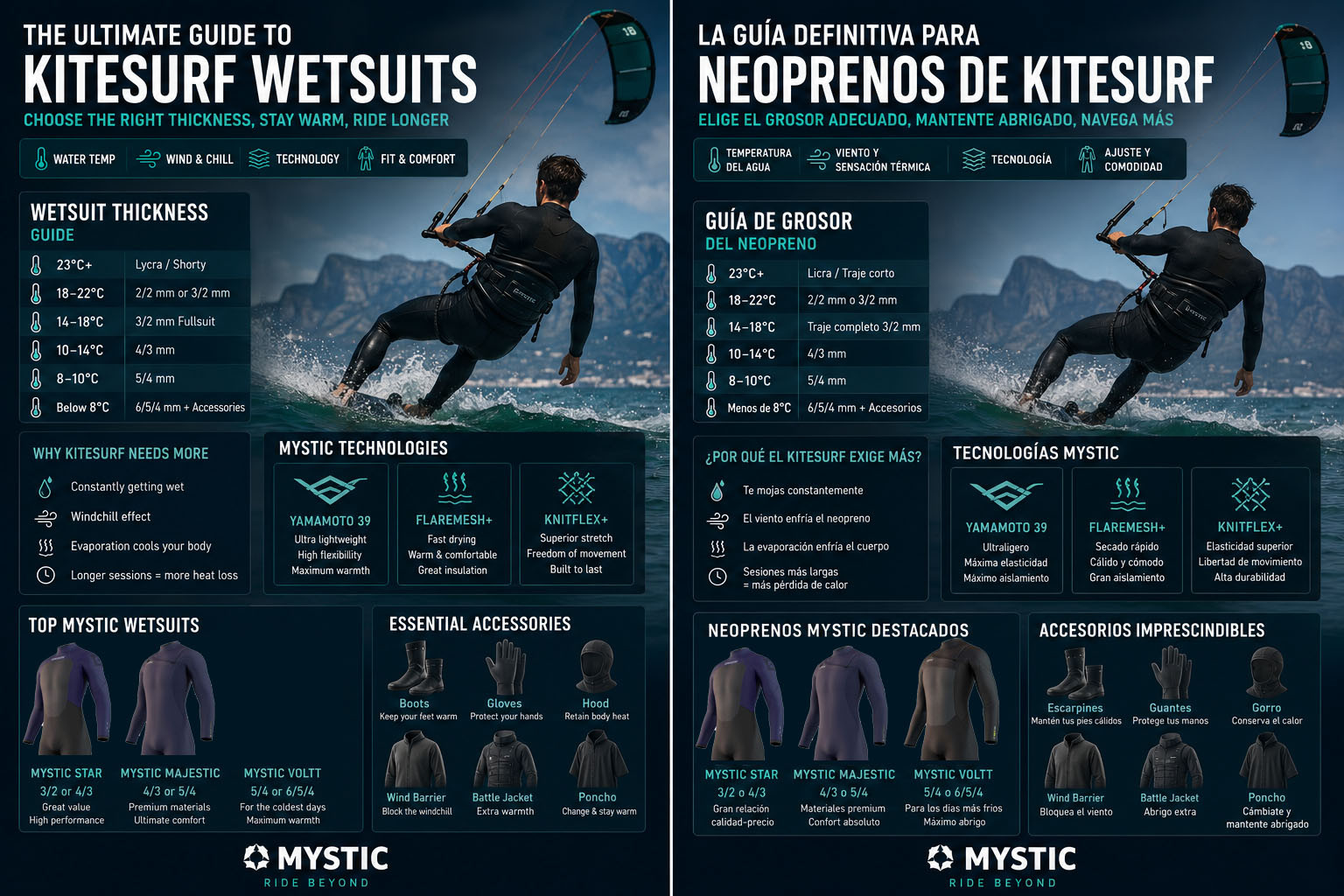
General Kitesurfing Temperature Guide
| Water Temperature | Recommendation |
|---|---|
| 23°C+ | Lycra or thin shorty |
| 18–22°C | 2/2 or 3/2 |
| 14–18°C | Full 3/2 |
| 10–14°C | 4/3 |
| 8–10°C | 5/4 |
| Below 8°C | 6/5/4 + accessories |
Important
These recommendations are only guidelines.
Factors such as:
- strong wind
- rain
- long sessions
- exposed spots
- or personal cold sensitivity
may require a warmer wetsuit.
Flexibility: One of the Most Important Factors Today
Years ago:
- flexibility
and - durability
often worked against each other.
Modern premium materials have changed that dramatically.
A flexible wetsuit:
- fits better
- lets in less water
- improves mobility
- reduces fatigue
- feels much more comfortable
Premium Materials and Modern Technologies
This is where high-end wetsuits truly make a difference.
Yamamoto 39
Used in premium wetsuits such as the Mystic Majestic.
Benefits:
- extremely lightweight
- highly flexible
- excellent thermal insulation
- superior comfort
Knitflex+
Mystic’s Knitflex+ outer lining improves:
- flexibility
- freedom of movement
- durability
Especially important for kitesurfing and freestyle riding.
Flaremesh+
One of Mystic’s best-known thermal linings.
Benefits:
- ultra-fast drying
- improved heat retention
- warmer feel
- exceptional winter comfort
The difference becomes very noticeable during long sessions.
Seam Construction and Waterproofing
Thickness is not everything.
Two wetsuits with the same thickness can perform completely differently depending on seam construction.
Standard Seams
More affordable.
Allow more water entry.
Common in entry-level or summer wetsuits.
Sealed Seams
Significantly reduce water entry.
Highly recommended for:
- autumn
- winter
- windy conditions
Fully Taped Waterproof Seams
The most advanced construction.
Includes:
- glued seams
- stitching
- sealing
- waterproof internal tape
Much warmer and more efficient.
Front Zip vs Back Zip
Front Zip
Currently the most popular system in kitesurfing.
Advantages:
- better sealing
- less water entry
- greater back flexibility
Widely used in premium Mystic wetsuits.
Back Zip
Easier to put on and remove.
Very comfortable for:
- beginners
- schools
- casual riders
Choosing the Correct Wetsuit Size
A wetsuit should feel:
- tight
- snug
- without major wrinkles or air pockets
If it’s too loose:
- water constantly flushes through
- thermal performance drops
- comfort decreases
Important Tip
Sizing varies between manufacturers and models.
Always check Mystic’s official size chart or ask for professional advice before buying.
Accessories That Truly Change Winter Sessions
Many riders can avoid buying a thicker wetsuit simply by using the right accessories.
Mystic Boots
Essential in cold water.
Benefits:
- massive heat retention
- improved comfort
- reduced fatigue
- foot protection
Neoprene Gloves
Especially useful:
- below 10–12°C
- during strong wind sessions
Neoprene Hoods
Your head loses a huge amount of body heat.
On cold days:
- a hood makes a dramatic difference
Mystic Wind Barrier & Technical Outer Layers
One of the most underrated accessories.
Products such as:
- Mystic Wind Barrier
- Mystic Battle Jacket
- Mystic Flaka Smock
greatly reduce windchill.
Perfect for:
- kitesurfing
- foil riding
- windy winter sessions
- cold dry climates
Which Mystic Wetsuit Do We Recommend?
Autumn & Spring
Mystic Star 3/2 or 4/3
Perfect for:
- recreational riders
- progression
- versatile use
Excellent value for money.
Versatile Winter Setup
Mystic Majestic 4/3 or 5/4
One of the most balanced wetsuits on the market.
Featuring:
- Yamamoto 39
- Knitflex+
- Flaremesh+
- fully sealed seams
It delivers:
- exceptional flexibility
- outstanding comfort
- excellent thermal performance
Harsh Winter & Cold-Sensitive Riders
Mystic Voltt
Mystic’s warmest and most technical wetsuit.
Designed for:
- very cold conditions
- strong wind
- long winter sessions
Do You Really Need a Thicker Wetsuit?
Not always.
Very often:
- a good 4/3
- combined with boots
- thermal layers
- and a windproof top
can perform perfectly in conditions where many riders would use a 5/4.
Final Advice: Comfort and Mobility Matter
The thickest wetsuit is not always the best.
Too much thickness:
- limits mobility
- increases fatigue
- reduces comfort
- affects performance
The perfect balance is:
- enough warmth
- good flexibility
- proper fit
- freedom of movement
Conclusion
Choosing the right wetsuit for kitesurfing involves much more than simply checking a temperature chart.
Factors such as:
- wind
- flexibility
- materials
- seam construction
- accessories
- riding discipline
- and session duration
can completely transform your experience on the water.
Modern Mystic wetsuits and accessories have evolved enormously and allow riders to stay comfortable even in extremely cold conditions.
At Ridezone, we can help you choose the perfect Mystic wetsuit setup for your local conditions and riding style.
Good wind and enjoy your sessions!